Under a circle of sacred cedar First Peoples singers Humbly awaken the voice of the drum Harmonizing with the hearts of good people While the eagle’s prayer Descends on the rays of the sun
A circle of happy dancers Gently touching the earth With moccasin attired feet Declaring to Good Spirit Their gladness at being The original keepers of the land
Many circles are necessary to create the traditional Pow Wow. The first circle is the circle of cedar under which the drums sit and singers gather to sing their songs. The drums are circles, too. Then there is a circle of dancers, young and old. They gently touch the earth with moccasin attired feet, in harmony with the voice of the drums. Some of the dancers enter the circle to pray. Their dance is medicine. Others enter the circle to socialize or to practice and develop their dance styles. The dancers may have one or several of a great variety of reasons for being there.
At the edge of the dancing circle another circle begins. This is where the observers of the Pow Wow are gathered to watch the dancers and to listen to the drums and songs. Healing often takes place in this circle. It just happens. People reconnect spiritually, with something pure and real. Tears are often shed, tears brought forth by a renewed pride one finds again within themselves and by a feeling of humility which fills their hearts at knowing they are a human being, appreciating what it means to be thankful for untold blessings.
Beyond this circle, yet another circle begins. This circle is the space where people encounter old friends. Much handshaking and hugs occur in this circle. People give news from their territories to friends and old acquaintances. They might request blessings and prayers there from trusted pipe carriers and elders, for loved ones stricken with illness back home. They might proudly introduce new family members, grandchildren or sons and daughters to people they admire from far off communities.
The last circle on the grounds of the Pow Wow site is the circle of traders and food vendors who surround all. These good and talented people are so very welcome at the Pow Wow. The traders have with them, items of great beauty and of special meaning to passers-by, for sale. And the food vendors? Goodness knows, the Pow Wow would not be whole without them. Indian tacos + buffalo burgers + bannock and jam = yum yum. The last and greatest circle at the Pow Wow is the one made in the sky by the hawk or eagle. One or the other of these birds will always come to soar circles over the Pow Wow site. They are the icing on the cake. A blessing from Creator we can actually see. What a wonder.
It is true the circles of the Pow Wow are many and that we all benefit in some way because of them. Our spirits soar in the energy of these circles.
Never forget this though, the Pow Wow at Kitigan Zibi would not happen if not for the generosity of their volunteers. The volunteers are circles unto themselves. They give up a weekend out of their lives so that you and I and our families can experience something empowered to help us grow in our identity and in our spirituality. Words cannot fully express how we feel about them.
Kitigan Zibi (K.Z.) goes out-of-pocket at least $15,000 a year to host their Pow Wow. There is no charge to enter. It is free because of the generosity of the people of K.Z. Let’s not take this enormous generosity for granted. Why not send an email to K.Z. expressing your heartfelt gratitude. It is not too late to do so. Check out K.Z.’s website and tell them “Kichi Migwech”!!!
Keep the Circle Strong,
Albert “South Wind” Dumont.
JoAnn Daniels Gaaminjiminang ojijaakowin (Holds on to her Spirit) was born 63 years ago at a time when a blanket of great beauty and colour covered the land. The autumn blanket sewn by one of the season’s grandmother moons, must have touched baby JoAnn in a magical way, and blessed her with a rare physical beauty, so stunning she was as a full-blooded Ojibway woman.
JoAnn was an artist who worked with hides and beads. She was meticulous in her craft. Each and every bead her fingers touched had to be placed, ever so perfectly next to one pre-selected from a cup of hundreds, waiting to give the creation life. “Life” is indeed what such artwork is capable of. Its power can reach into the soul of an assimilated First Peoples’ individual and push him/her to rediscover a lost heritage. JoAnn knew this.
In the last weeks of her life, JoAnn the mother, sister, aunt, friend, and artist was not afraid of death. “I only wish I had another year,” she said, “so I could do a few things differently.” What those “things” were, are known only to JoAnn and perhaps to her closest relatives.
Shortly before she died, an elder acquainted with JoAnn was driving along a country road. JoAnn suddenly appeared in his mind. With her still in his thoughts he observed a small hawk leaving a roadside field. It struggled against the wind to do so. The hawk held something in its claws, a stick perhaps for a nest or maybe a small rodent, the elder wasn’t sure. The hawk, though experiencing great difficulty climbing the windy sky did not release what it was holding, so precious the item was to its survival.
Gaaminjiminang ojijaakowin “Holds on to her Spirit” passed away a few days later at dawn. What can be accurately said of any dawn is that no living thing on this earth knows with all certainty what shape its health will be in when the sun of that particular day sets. No man, animal, bird, fish, mountain or leaf knows for sure. The rising sun brings wonder and mystery. “Holds on to her Spirit” chose the dawn to take the hands of her pre-deceased mother and father and go with them to the Land of Souls. Like the small hawk who struggled to climb the sky, she had struggled through life, making the best of being raised by parents who had survived many abuses and traumas at Residential Schools. She fought the winds without ever letting go of her grace, charm, dignity and the passion she had for the health and well-being of her family.
Her sons can tell their children that “Holds on to her Spirit”, their loving Kokom (grandmother) left the hardships of this world when sweet blossoms covered the branches of fruit trees and May flowers stood scattered through the marshy forests of their territory.
Keep the Circle Strong,
Albert “South Wind” Dumont.
Proudly do I report the success of the launch of Sakahàn (Igniting a Fire) art exhibition at the National Art Gallery on Thursday, May 16.
My friends, artwork speaks. The voices emitting from the creations of our artists today are entities born in the chants of an ancestor sitting in the glow of a fire somewhere far into the past. The reach of the voice into your psyche depends on how open your mind is to the message of the artist. If you have even the smallest interest in the arts, then please, do yourself a favour and take in Sakahàn. Bring the little ones to it. Sow the seed, hear the voices, change your life and theirs.
The launch was perfect and made so because of many, including the Eagle River Drummers, Chief Gilbert Whiteduck, fire keeper Peter Decontie, community leader Claudette Commanda (all from Kitigan Zibi), Danielle Lanouette (Algonquin), the multi-talented Theland Kicknosway (Pottawatomi Cree), his mother Elaine Kicknosway (Cree), the hoop dancer Rhonda Doxtator (Mohawk). A special thank you for Jaime Koebel (Métis) and Greg Hill (Mohawk) who planned the launch: Kichi Migwech.
I also played a small part in the event as I opened the proceedings at the Gallery with a prayer. The following are words I wrote for “Sakahàn” and what the word means to me, an Algonquin spiritual advisor. The Gallery holds copyright to these words.
SAKAHÀN
by Albert Dumont for the National Gallery
The igniting of a fire by human beings at the commencement of a ritual or ceremony brings greater sacredness to a place already made holy by the blessings of Kichi Manido (Great Spirit). The First Peoples who lived on Turtle Island long ago were keenly aware that without fire, the sacred medicines of tobacco, sage, cedar and sweetgrass would not have the ability to carry prayers into the spiritual domain of Kichi Manido. Fire consumed offerings of cloth and berries on behalf of the First Peoples and by doing so, placed these offerings on the feasting blankets of their loved ones who had travelled to the Land of Souls before them.
The ancestors saw the great respect fire had for water and that fire could only live if the wind allowed it to. They saw that fire could only exist if it had the support and cooperation of other things placed on Mother Earth by Kichi Manido. With this knowledge, the First Peoples recognized fire as a wise teacher. They were drawn to sing honour songs for water, the winds and for the health of Mother Earth because of what fire had taught them.
A sacred fire sings a song. A melody to which fish, birds, animals and insects are attracted to. A sacred fire ignited after the moon has risen, burns in the centre of a circle of its own creation. All which is alive in this sacred circle of light has nothing to fear, evil and wickedness cannot enter there.
The sacred fire is a prayer onto itself. A prayer you can see and smell. A prayer you, as a human being, are invited to be part of. It touches you and teaches you lessons of spirituality. It humbles you. It allows you to sit in the centre of God’s blessing.
Keep the Circle Strong,
Albert “South Wind” Dumont.
At a time of spiritual meditation I am sometimes drawn To point my face towards the sun My eyes tightly shut Still, through closed eyes I see all the colours Of a magnificent sunrise before me Like the fire within the fire The heart and spirit of the day I see it
My childhood years and my years as a young adult were years when my spirit did not sing and dance when the eagle appeared in the sky. I denied my spirit a chance to sing for I was, at that time, on my way to becoming an assimilated Indian. I was lost. I did not stand proud as a sober Algonquin. I drank excessively and in doing so, brought heartache and tears to all who loved me. Had I continued as I was, I would either have died young in some kind of violent confrontation over foolishness or I would surely have slid into a city gutter as a hopeless and desperate alcoholic. But with the help of my ancestors I slowly regained my identity as an Anishinabe Inini (First Peoples Man). With it I discovered spirituality and with the blessings of Great Spirit by my side, I found my life of sobriety.
If the people who hoped to rob me of my true purpose of life had been successful, then today I would be an assimilated drunkard crawling in the sewer of rotgut, searching in its stench for something impossible to find there. In such a state I would not be regarded as a threat to corporations and governments who seek to rape my ancestral lands of their riches until there is nothing left on them but sand.
This land of the Algonquins was always fertile and great in natural resources. The riches on the land were not installed into it by Europeans or by anyone else who came here from a far away continent. The resources held by the land will remain where they are. If my voice has a say in it, the land will always be healthy. The next generations are counting on us to defend the land.
Whenever the opportunity arises I will dare to speak of my love for my family, my people, my land, and I will do so without fear and without concern for how superior-minded people react to it.
Keep the Circle Strong,
Albert “South Wind” Dumont.
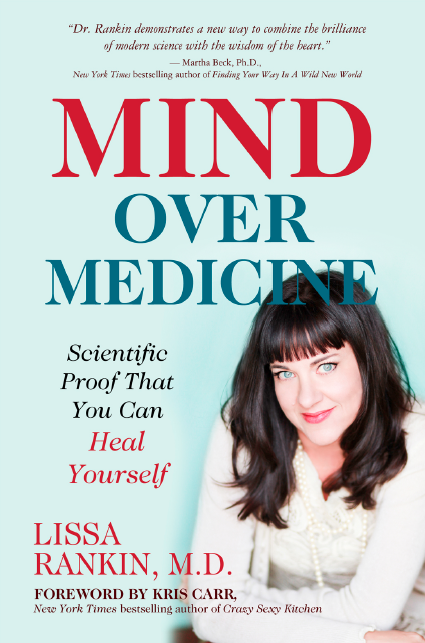
Can a “dead” arm come back to life because of the unshakable belief that it will, even when a specialist says the nerve damage is irreversible? What if chronic illness that pills and surgery cannot fix can be healed with positive beliefs, loving relationships, and spirituality? What if the stuff our modern western society tells us to do to stay healthy isn’t really the secret sauce to vitality and longevity? The following guest blog post by Julie Comber explores these ideas in an interview with Albert about Dr. Lissa Rankin’s new book, Mind Over Medicine: Scientific Proof That You Can Heal Yourself. A video with highlights of this interview is posted here.
Julie: It’s my pleasure and a privilege on this beautiful Spring day in Ottawa to interview Albert, an Algonquin Elder from Kitigan Zibi (two hours North of Ottawa) about Mind Over Medicine. Albert is a poet, writer, spiritual advisor, and speaker. I can’t think of anyone I’d rather talk with about this book! First, I’ll give a brief overview.
Mind Over Medicine is a compilation of the mind-blowing data Dr. Rankin compiled from the scientific literature on healing, and a guide on how to apply this knowledge to optimize your own healing. Dr. Rankin suggests we can create our own Diagnosis, and then write our own unique Prescription to heal ourselves.
Albert, can you tell us your own story about your accident, and how you healed from it?
Albert: Sure. It was about 22 years ago when I was a bricklayer, and I was on a gristmill’s roof, and the roof buckled. I fell 43 feet and landed on my feet, but I crushed two vertebras, and cracked two vertebras above and below the crushed ones. I had four inches of collapsed nerve in my left arm, and the specialist said it would never come back. I broke my right heel and left ankle. So I had a lot of injuries, but I wasn’t paralyzed, and I was grateful for that. My left arm though was paralyzed, and they said that’s the way it would be for the rest of my life. And if I had believed that doctor, my arm would still be paralyzed. But I thought, “that’s a doctor’s opinion.” I knew I had Ancestors in the Spirit World who knew medicine, and that they would have a different opinion. I could make a request for them to come by my side and help with my arm. And as you can see, obviously that’s what happened, because my arm did come back. It was because of my belief that the physical can communicate with the spiritual. In the Spirit World, the spiritual will respond, and help you out. These relatives in the Spirit World love you. If you make a sincere, humble, respectful request of them, they will do whatever they can for you.
Julie: Along with your spiritual beliefs, you mentioned you did a Ceremony with an Elder you respected. Could you talk a bit about that?
Albert: Yes, there was an Elder here from Northern Quebec, and he was visiting at a friend’s house. I wasn’t worried about my back. It was sore and I was wearing a body brace, but I was moving. I was worried about my arm, which was still paralyzed. He said to go with him, and we went to Lanark County, because he said it was rich in medicines. We would be driving along, and we’d pull over, and he’d go into the forest and lay some tobacco down, and go get some root, herb or bark. Once he had enough medicines, we went back to his friend’s house, and he boiled up these medicines. He did a smudging ceremony from the basement right up to the top of the house, and in every room. Then I drank the brew. He brought out his drum and sang a song… After the ceremony, the Elder asked me if I believed that my arm would get better. I said I did. And he said, “because it will.” And it did.
Julie: Along with believing in the ceremony, you told me you also visualized your arm moving again…
Albert: That’s right. Because my back was broken, I spent a lot of time in bed, and I had this body brace on. Whenever I did exercises, I had a soup thermos that I would put in my left hand. Because I had that body brace on, whenever I moved my shoulders, my whole body moved, and it would make the soup thermos move up and down. But I was saying in my mind, “it’s me making my left hand move,” as opposed to it being because of moving my shoulders. I kept telling myself that.
Julie: It was like you were training your body, like a physical visualization of your arm moving again.
Albert: For sure, and I never doubted it would move again.
Julie: What do you think about one of the main arguments in Dr. Rankin’s book, that what you think and what you believe really affects your health, and positive beliefs can improve your chances of healing?
Albert: My spiritual beliefs tell me that these are our relatives, these trees here. There’s a Willow tree, and this is an Elm, and there is water here, too. Those are our relatives. When you really believe that we are surrounded by relatives, then we are never really lonely, and we are never far from help. Because a relative will help a relative, that’s my belief. Right now I can see an ant or spider coming down that tree trunk, that’s a relative. Those birds singing, those are our relatives. They offer something. If you really believe it and you make your request of them, you can heal. Because they are so strong in medicine, all these things.
Julie: Dr. Rankin writes a lot in the book about the stress response, and how this stress response switches off our body’s natural ability to heal. She gives tips on how to counteract the stress response and bring about the relaxation response. Could you please comment on the role spending time in Nature can have in promoting the relaxation response?
Albert: Well, shortly after my accident, I woke up one day and had a memory of a place I used to swim when I was a teenager. There’s falls, there’s rapids, and a swimming hole there. I’d bring my pipe with me, and I would go and communicate with my relatives. There were birds, bees, spiders, otters and beavers. And the rapids, the falls, the energy of the river, the wind. I would meditate on my predicament and why I needed healing. Because this was only a few years after I began my life of sobriety. I had a severe alcohol addiction. It was the starting point for me, that special place, that support, and the energy of that special place. It made me heal mentally, physically, emotionally, and I grew stronger spirituality as well… I would sit in the rapids, and it was like the spirit of the river was giving me a massage. And I would also lay on the ground on my sore back. Because Mother Earth, the clay, is healing. When animals are wounded, they press their wound to the earth.
Julie: In the final part of the book, Dr. Rankin encourages people to take all this research that she did, and apply it to their own healing. She suggests we write our own Diagnosis, and she has a series of questions in the book to help us come up with this Diagnosis. And then she advises that we write our own Prescription (and act on it!). And that may include all the conventional things, like pills and surgery, but it will likely include spending more time in Nature, healing relationships, etc. So it’s a very holistic approach to healing. Do you have any comments on this idea of writing your own Diagnosis and Prescription?
Albert: That’s exactly what I did after my accident. And to start my life of sobriety, too.
Julie: Dr. Rankin writes in the book, especially in Chapter 10, “6 Steps to Healing Yourself,” that you really need to “find the right team of people to sit at your healing round table” to support your healing, so that you are not alone. She wrote this team may be composed of doctors, alternative healthcare providers, and loved ones. For her, the key things about this team is that each person must truly believe you can heal, have your best interest at heart, have a positive outlook on your healing, and each team member must respect each other, even if they do not agree with each other. When we talked about this idea, you felt there were other beings, not just living humans, who could be added to this team.
Albert: Yes, we call it having a Spirit Helper. I have several. The robin is an important one for me, but the robin is not here all year. So I also have partridge, rabbit, hawk, cranes, and herons. And as long as they are there, then I’ve got a lot of help. They are part of my team. Most definitely my Ancestors are on my team, too, and friends. I have a big need to just be able to call up a friend and say, “lets’ go do dinner.” I get a lot out of that. And I believe in Ceremony (with my team).
Julie: Its been great talking about Mind Over Medicine with you! Anything else to add?
Albert: I’d just like to say that I stand proudly in my own Aboriginal spirituality, and I also stand behind anything that brings healing to anyone. I think reading Mind Over Medicine will help people understand how to heal themselves. Words fashioned together in a good way are healing, and I appreciate how Dr. Rankin is using her words to help heal individuals and to heal modern medicine, too. I agree that modern medicine has ignored the importance of the patient’s own belief that she or he can heal. Modern medicine has ignored the importance of so many parts of our lives that truly keep us healthy and happy, like our spirituality, the quality of our relationships, and the kind of work we do.
The fact that I can use my arm again is my own “scientific proof” that we can heal ourselves. I believed I would have feeling again in my arm, visualized it being healed, I had faith in the Ceremony of an Elder, and I knew that my own Ancestors would help me heal. And I did heal. I wish Dr. Rankin very well and I hope many people read her book.
Guest blog post by Julie Comber, with many thanks to Albert “South Wind” Dumont.
You can get Mind Over Medicineonline, and it was launched in bookstores on 7 May. To learn more about Dr. Lissa Rankin and her work, go to http://lissarankin.com.
Do you have stories about self-healing? Thoughts on the role of spirituality? Please post comments!
Maybe it’s a guy thing, but I have a very clear memory of the very first time blood left the veins of my body and ran outwardly upon it because of the violent actions inflicted on me by another human being. I was all of seven years old. My assailant was the same age as I and lived two doors down from the house my parents were renting in the mining town we were living in at the time. I recall that the other boy and I were having some kind of disagreement outside his house. His father suddenly appeared at the door and ordered, “Punch him! Hit him! Punch him!” The other boy who was standing about 6 feet away from me, took a few steps towards me, and obediently let fly a roundhouse with a tightly clenched fist. It caught me square on the nose. In a second, blood began to trickle from my left nostril.
I was totally shocked, stunned, bewildered – all those not so good things, you know what I mean. It hurt, but I didn’t cry and I didn’t raise my hands to my nose to protect it from greater damage. I stood statue still, glaring back and forth at the boy and at his dad. My instinct was to strike back. Couldn’t do that though, the dad was sure to get involved if I did.
The boy just stood there, his clenched fist by his side. His dad gave him no further instructions. After a few minutes, I walked away and headed for the veranda in the back of my home to mentally process what had just occurred.
There was lots to think about. No one other than my parents had ever hit me before that day. Certainly my blood had never been spilled because of violence. It was a first. I didn’t know what to do about it other than promising myself that never again would I allow the hand of a male outside my family to ever be raised against me without me responding quickly and decisively. I promised myself then that forevermore, I would use whatever force was at my disposal to stop any male assailant from striking me a second time.
The boy who hit me stayed close to home after the day of the assault. He never ventured to the old fairgrounds where other boys his age went to play tag and hide-and-go-seek in the old sturdy barns found there. He never showed up at the river to swim and dive for bottles. No, he stayed home where he felt safe in the presence of his cowardly father. Before September and school rolled along, the boy’s family moved away, somewhere in Ontario, I think. Gone, never to be seen in the “Pontiac” again.
Reflecting on the memory, I believe the other boy was just as shocked and bewildered as I was after he clobbered me. He must have wondered why I wasn’t crying or why I didn’t make a move to wipe the blood from my face. He was probably scared. I doubt he had ever drawn blood before through the power of his tiny fists. The fact that I stood there glaring at him must have been unsettling for him too. Even his dad must have been a bit spooked at how I reacted.
I haven’t cocked a fist at a man in a turtle’s age (as in clan). There was a time when I didn’t mind kicking up the dust with a troublemaker who was looking to knock me into the middle of the next week. Not any more. “Give peace a chance,” that’s what I stand for today. Didn’t one or two of the Beatles feel the same way?
To my faithful readers who enjoy reading my blogs, I want you to know that I would never have struck another child like the boy of my memory did to me. My dad would never have commanded me to do such a thing. I deplore violence. If hate must exist in the world we live in, then let us stand as one with a big unceasing hatred towards violence. Let us hate ‘ violence’ passionately. If most people condemned violence and shunned those who perpetrate it but stood with them in their rehabilitation, it wouldn’t be too long before violence would disappear from our neighbourhoods and cities. Am I wrong?
Keep the Circle Strong,
Albert “South Wind” Dumont.
A day for Mike (Black Bear Man) usually began with him being mechanically lifted out of bed, then washed, dressed and fed by staff at the longterm care hospital where he resided. Mike was a quadriplegic. His paralysis occurred when in a drunken state, he attempted to perform acrobatics on the roof of a tall house. He fell to the ground and broke his neck in the process.
Albert with Black Bear Man on the day he received his Spirit Name in 1996
Mike had suffered from severe alcohol addiction long before his accident happened. And it remained at his side for many years thereafter. He desperately wanted to quit the booze but unfortunately, he was never able to find the strength necessary to fully rid his life of it. He was getting there though, slowly but surely. I’m sure he would have put alcohol behind him for good if he had lived longer.
Mike was overtaken by an infection and died at age 43, approximately 13 years after his accident. Mike and I were good and loyal friends to one another for the entire eight and a half years I knew him preceding his death.
Mike was poor as the proverbial ‘church mouse’ but, shrewd character that he was, financed his alcohol addiction by hook and by crook and by placing into motion at every opportunity something he called “the way of the con”. It went like this. He would spend a good part of the morning sitting in the hospital lobby, where he would wait for a visitor with a soft and generous heart to come by. There were many, and Mike had a knack for skillfully separating one of ‘em out from the herd before he pounced. Eye contact was necessary and once it was made, a conversation between Mike and the visitor probably went something like this:
Visitor: “Hello.”
Mike: “Hi.”
Visitor: “How are you doing today?”
Mike: “Not too good.”
Visitor: “Oh dear, what’s wrong?”
Mike: “Well it’s my birthday today, and there’s this shirt I wanted to buy, but I’m $10 short…”
You can imagine the rest, can’t you? Mike had birthdays at least 15-20 times a month.
A big white jug which easily held 20 ounces of beer was attached to Mike’s wheelchair. A large plastic straw protruded from it. The business end of the straw lay deep in the jug, the outer end, near his face, waited for Mike to suck up beer from the inside. How he loved it.
Mike had lost brothers and sisters to alcohol addiction. They died from liver diseases associated to alcohol abuse, car accidents and some even lost their lives in drunken brawls. I asked him one day. “Mike,” I said, “alcohol has cost you the lives of your siblings. It has placed you in a wheelchair. I want to know how it is that you still want a connection to it. I want to know why you don’t hate the stuff for all the misery it has cost you and your family?” Mike didn’t have an answer for me.
Severe alcohol addiction really is a heartless monster. I guess it could be as big as the tall house Mike fell from, and more ferocious than a wounded lion twice that size. But let’s be clear, it can be slain. I know, because alcohol had me in a death grip for most of my life until one night I killed it dead. I wonder though if I would have been able to slay it if I had been paralyzed from the neck down and living in a longterm care hospital. Such a place is not exactly an ideal setting for recovery from a severe addiction, is it?
Black Bear Man would have pulled it off, I’m certain of it. We talked about it often. His urge to drink came at longer intervals in the last years of his life. He turned on to spirituality and received the name “Black Bear Man”. Because of the blessings of Great Spirit, he is sober now and doing quite well for himself in the Land of Souls.
He asked me once if I could write a poem that would express his gratitude to the nurses who showed him kindness and professional care. I agreed. When the poem was finished, he had it framed and he presented it to them. The nurses placed it on the wall in their lounge. Please find it below.
Black Bear Man was a good human being. When next you pray, say hello to him. Ask something of strength from him. I’m sure he will oblige your request. He was that type of guy. Believe me, he still is.
I hear your soothing voice
And it sings the great song of hope
And your warm compassionate eyes
Calm my frightened heart
And your soft and gentle touch
Lifts my will
And reassures my battered spirit
And when you stand near my sickbed
The room fills
With the dedication and commitment you have
To all who are sick and infirm
And I am comforted by your presence
I will forevermore
Honour the memory of your goodness
For when I hear your soothing voice
It sings the great song of hope
(Inspired by the thoughts of Michel Cornell)
Keep the Circle Strong,
Albert “South Wind” Dumont.
Throughout the days of the year a powerful energy created by the seasons is constantly emitting from the land. Human eyes cannot see the energy but it rises from the land in the same way as smoke rises from smoldering embers. The mightiest trees and the smallest plants contribute to its power as does all other life on the earth. The winged, the swimmers, the crawlers, the four-legged and the rivers and lakes of our territories, all lend spiritually to the greatness of the energy. And though it is an energy whose power and purpose arises from life on the land, it is the moon who directs when it will live and when it will give way to a new energy as great as itself. The energy is obedient to the moon and never breaks from her direction and instruction.
Spring, Summer, Autumn and Winter have their own unique spirit attached to them. Over the passing of a year, each season will bring sacredness and well-being to the land.
When human beings are born, the spirit of the season is there to greet them. With the first breath a human being takes, the energy of the land finds a place in their hearts where the spirit of the child embraces it and holds it for all of the moments the heart will live.
The heart of a person born in late autumn does not fill with hope in the same way as that of a person born in spring. It is something the mind had little to do with. The emotional realm of a human being acquires its strengths from whatever is alive on the land when their first breath was taken after their birth. The late autumn is a time when a mournful energy travels the land. The territories are no longer alive with colour and beauty. The bear is gone into hibernation, the turtle, too. The land is adjusting to her losses. These occurrences impact the human beings who are born at that time in both the spiritual and emotional realms.
Wouldn’t it be strange if the United Nations decreed that only people born in winter could become world leaders? What if only people born in summer were allowed to become teachers to our children? It wouldn’t fly very well, would it?
Having said that, each moon offers specific traits, all honourable, to the people born within the perimeters of their 28-day cycles. Winter people are more motivated by spirituality than people born in other seasons. They are quiet and gentle by nature. Spring people are curious and adventurous. They are risk-takers and their high energy level motivates them to work hard and succeed in life. Summer people are strong-willed, sensible, honourable and good team players. Autumn people are sensitive, passionate and kind. They tend to dwell too long on the shortcomings of the world around them. But the land, the seasons, the moons have much to say to you about why you process your thoughts the way you do.
I am writing a book on the subject of Birth Moons. Watch for it in October 2013.
Keep the Circle Strong,
Albert “South Wind” Dumont.
The snowstorm I feared might occur was there to greet me when I reached the southern outskirts of Val-d’Or as I made my way to Kitigan Zibi. I braced myself for a long, dangerous, late-night drive home.
Snowflakes of varying sizes, swept by the wind towards the windshield of my old Honda Civic, had a mesmerizing effect on me and released my creative spirit to do as it willed. I imagined I was commandeering a starship zooming through uncharted territories of stars and planets, boldly going where no Algonquin had gone before. Funny what headlamps on the high beams of a moving car do to snowflakes in the dead of night, “where did that yellow line go?” When you’re in it, keep both hands on the steering wheel, my friends.
Thankfully, the traffic was sparse, and I found after a while that I was able to find peace, at least to a small degree. I reflected on the presentation I had made to the students at Université du Québec en Abitibi-Témiscamingue. They seemed to be happy with my sharing on the topic of “leadership”. It was a video teleconference with people even in France participating. I have no doubt all of them benefitted from the richness of my life’s experiences. Mine has been a tumultuous life and I often offer prayers of thanksgiving that I survived to tell the tale.
Life is strange and snowstorms have a way of gauging, very precisely, just how well you have combatted the negatives you encountered over the years. The weak will crumble in the face of a fierce one, the foolish will say “onward in high gear” and end up in a car wrapped around a tree. The strong and sensible though, who have survived more than their share of storms, will proceed with caution, keep their wits about them, and pray hard. They get to point B from point A in one piece and can proudly add one more notch to the stick which measures the confidence they have in themselves.
To the students I met in Val-d’Or I say, give purpose to your life. Learn from your mistakes. Do not attempt to make sense of the shortcomings of the systems we are forced to live under. To do so would be as ridiculous and as destructive as it would have been for me to try and count the snowflakes which made contact with the windshield of my car the other night. I would surely have strayed off the road.
Always be thankful. There are many blessings to count.
Keep the Circle Strong,
Albert “South Wind” Dumont.
The mind. A place where thoughts are created, processed, and occasionally given life. All thoughts shake the rattle of life to a certain degree. However mild or however strong it is, depends on the thought’s ability to provoke ideas in the minds of other people. There is no such thing as a person who is ‘simple’ minded. The mind is a strange and complicated galaxy of ideas, especially when it bubbles in the head of a poet. The mind of a poet is a mishmash of sunrises and sunsets, of births and deaths and of all things in between.
I was wondering one day about the mind of a newborn baby. I asked myself, what if anything, is going on in their tiny heads. It was a fascinating exercise.
All human beings are born with a spirit attached to them. The spirit lives in their hearts, where it meticulously records all the good and bad deeds initiated by the person it is connected to. Though the spirit is aware that the newly born human being it is attached to is in great need of physical care, so too does it recognize its own need for nourishment and sustenance. Young children are helpless and will need proper teachings and direction to guide them through life. All will benefit, in all realms, from sweet lullabies and from whispers of love. All will prosper too from the familiar caresses and tear based chuckles of proud parents.
All human beings ever born emerged from the womb surrounded by the energy and spirit of the drum. At birth, the acquirement of the things in their sacred bundle had begun.
All of us know what it is like to hear the heartbeat of a woman. A gentle drumming which spiritually nourished us as we grew in the womb. The heart of a woman, whose body is producing the ‘miracle’ of life is different in sound than is the heart of all other human beings alive on the earth. It is a drumming heard by relatives passed on into the spirit world. Its vibrations are felt by ancestors who lived and died many thousands of years ago. It truly is a sacred sound.
The thought of how the beating of my mother’s heart created the great love, respect and honour I have for my spiritual beliefs, places me on the wings of a raven, soaring over the tallest pines on the highest hills of my homeland.
It was after pondering the mind of a newborn baby that I wrote the poem ‘I Remember the Heartbeat’. If it is your wish, please accept the message of this poem as a gift from South Wind. Enjoy.

 Under a circle of sacred cedar
 Keep the Circle Strong,
 The launch was perfect and made so because of many, including the Eagle River Drummers, Chief Gilbert Whiteduck, fire keeper Peter Decontie, community leader Claudette Commanda (all from Kitigan Zibi), Danielle Lanouette (Algonquin), the multi-talented Theland Kicknosway (Pottawatomi Cree), his mother Elaine Kicknosway (Cree), the hoop dancer Rhonda Doxtator (Mohawk). A special thank you for Jaime Koebel (Métis) and Greg Hill (Mohawk) who planned the launch: Kichi Migwech.